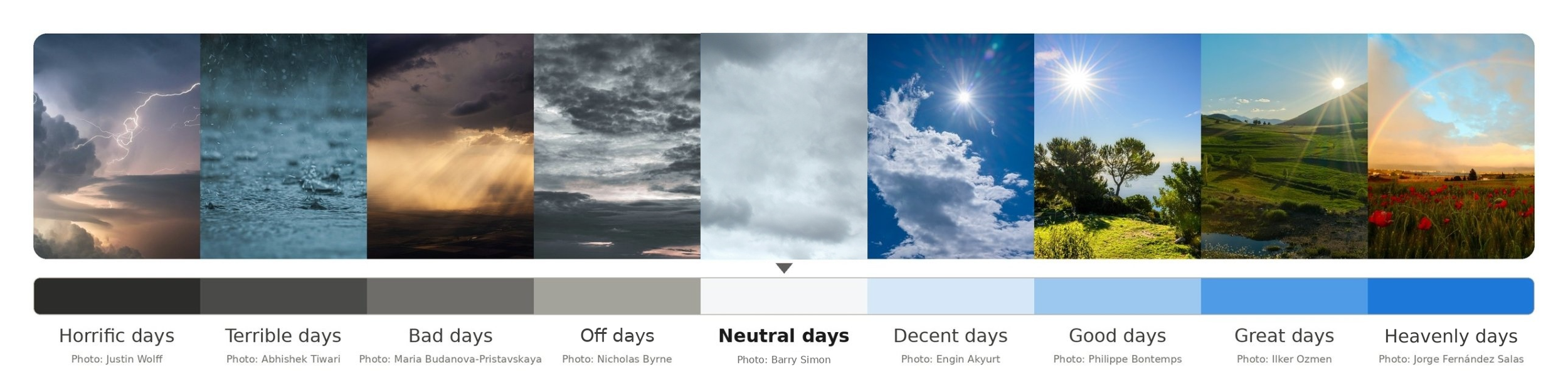
Even our worst days have rays of sunshine. Sometimes we’ll have to squint through the clouds to spot them, but they’re there.
And there are things we can do to part the clouds enough to make a bad day an off day or a good day a great day.
Like what?
For me, whenever I read from a really good book, I feel better.
If I challenge myself and succeed, it will give me a moment of satisfaction. If I don’t challenge myself, I’ll lose that chance. If my golf swing is working and I strike the ball well, I’ll get a jolt of joy. However, if it’s not working and I’m scuffing, I get frustrated and my day gets worse. So challenging myself is a risk I don’t take every day.
The answers needn’t come from me. All you need to do is write a decent prompt.
Ask your go-to AI, “What are 10 (or whatever number) things I can do to make my day better?”
You’ll get something close to this:
Here are 10 simple ones. A few still work tonight, and the rest can shape tomorrow.
Get outside first thing. Ten minutes of morning daylight and fresh air, even just a walk around the block, lifts your mood and helps you sleep better that night.
Pick one thing that matters. Before you check email, decide on the one task that would make the day feel worthwhile, and do it while your energy is fresh.
Move your body. A walk, some stretching, or a bucket of range balls all count. Movement is one of the most reliable mood boosters there is.
Reach out to someone. Call or text a friend, a former student, or someone you’ve been meaning to thank. Connection does more for a day than almost anything else.
Do one small kindness. Hold a door, write a short note, or give a sincere compliment. Helping someone else lifts your own spirits too.
Limit the news and the scrolling. Pick a time to check headlines and social media, then put them down. You’ll get back attention and calm.
Take a real pause midday. Eat lunch without a screen, sit outside, or close your eyes for five minutes. A break in the middle keeps the afternoon from dragging.
Make or learn something. Write a paragraph, read a chapter, try a new recipe. Even a small creative act gives the day some shape.
Clear one small mess. Tidy a drawer, answer a lingering email, or file that one paper. Finishing something small gives you a sense of control.
End the day with gratitude. Before bed, write down three good things that happened, however small. It trains your mind to notice the good, and it’s a nice one to start tonight.
If you only do two, I’d make them #4 and #10. They take almost no time and make the biggest difference.
Note: I asked Anthropic’s Claude at 6:52 PM.
You may have noticed that Claude’s answer was a bit tailored to me. It’s getting to know me. Still, the trick with AI is to take its advice and make it work for you.
For example, my #3 “Move your body” is my nonnegotiable morning workout. It works like magic. But I only feel better when the exercise is uncomfortable.
So, to get it over with ASAP, I start my day with a trip to the gym, a run, a hike, or some yoga. Whatever form my “Move your body” takes, if it’s comfortable, I won’t feel the benefit.
I get the highest highs and have my best days when I push out of my comfort zone—and then get to return to it. By its very nature, exercise is uncomfortable. So I force myself to start with it. Then I get to be more comfortable the rest of the day. Physically, anyway.
The same goes for all the other AI-generated advice. “Make or learn something,” for me, is creating a YouTube video for the My Vital Lesson channel. “Reach out to someone” means keeping up my daily ritual of sending a from-the-heart birthday greeting to whoever has a birthday that day.
And whenever I pick up litter while walking or hiking, I can check off #1, #5, and even #3 all at once.
We now live in a world where getting advice and learning what to do have never been easier. The blueprint for improving our days—and lives—is simple to access.
Following it and making it work for us will always be the challenge.
AI or not, knowing what to do has always been a whole lot easier than doing it.